Website experience · Chatbot
From static website to dynamic assistant
Most B2B sites still behave like online brochures. This article shows how an AI assistant can turn those same pages into a real conversation with buyers.
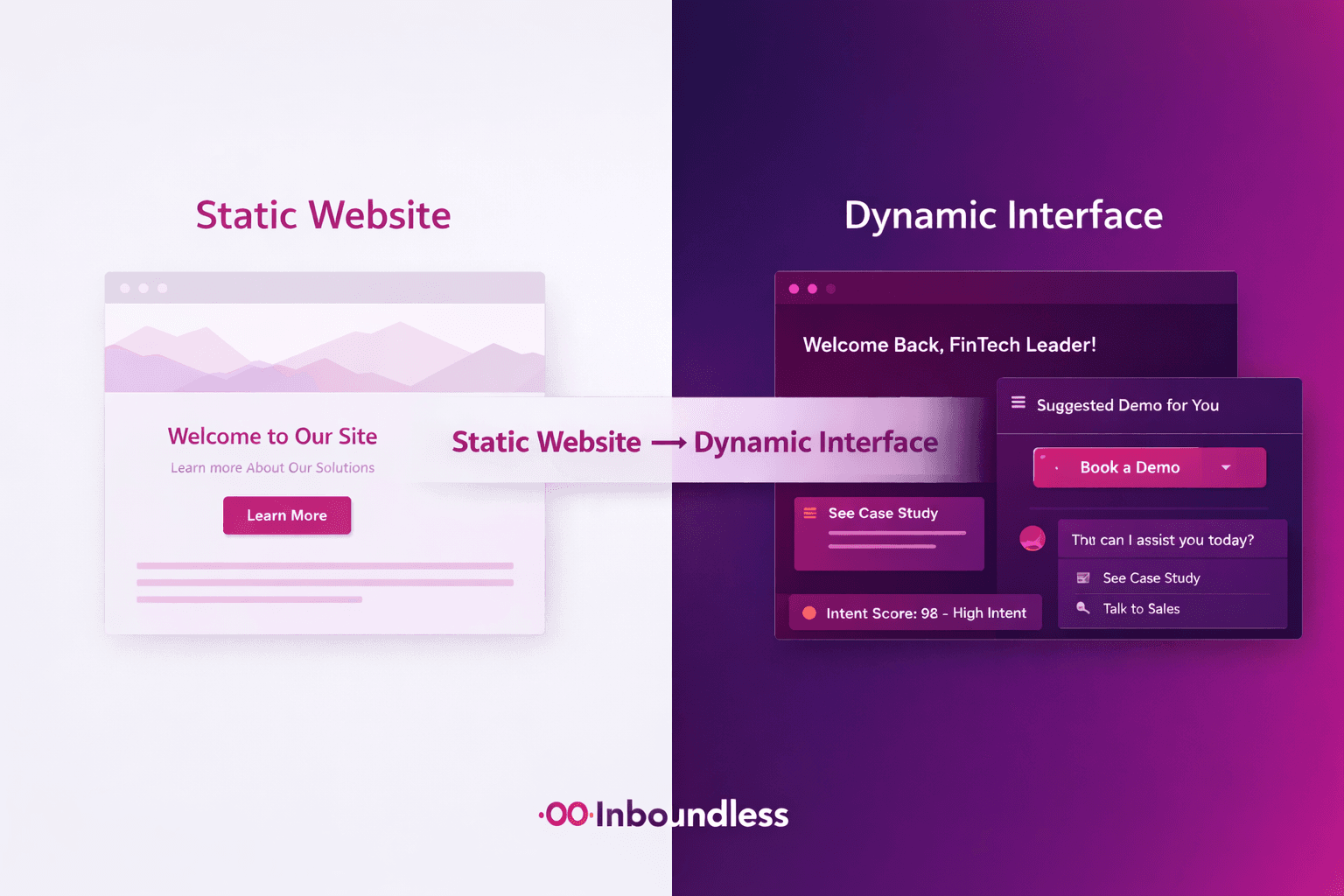
On a static site, visitors read a few pages, maybe fill a form, and then wait. You don't know what most of them were looking for or why they left. A dynamic assistant changes this: it invites visitors to talk, understands what they need, and offers a clear next step.
The goal is not to replace your pages, but to add a layer that makes them easier to use, especially for people who are close to buying.
Where the assistant should live
Start with the handful of pages where visitors are most likely to be ready for a conversation:
- Pricing and main product pages.
- Key comparison or “Why us?” pages.
- High‑intent landing pages from campaigns.
On these pages, the assistant can offer simple choices: learn about pricing, see if you're a fit, or talk to sales.
How the experience changes
With an assistant, the experience on those pages looks more like this:
- A short, friendly welcome instead of a silent page.
- 2-3 simple questions instead of a long form.
- Instant answers to common doubts.
- An offer to book a meeting when intent is clear.
Behind the scenes, the same conversation can update your CRM and alert the right rep, so you keep your existing systems while giving visitors a much smoother path.