Buyer behavior · Gartner, G2, Salesforce
State of B2B buying in 2025
A plain‑English summary of what recent Gartner, G2 and Salesforce reports say about how people actually buy software today.
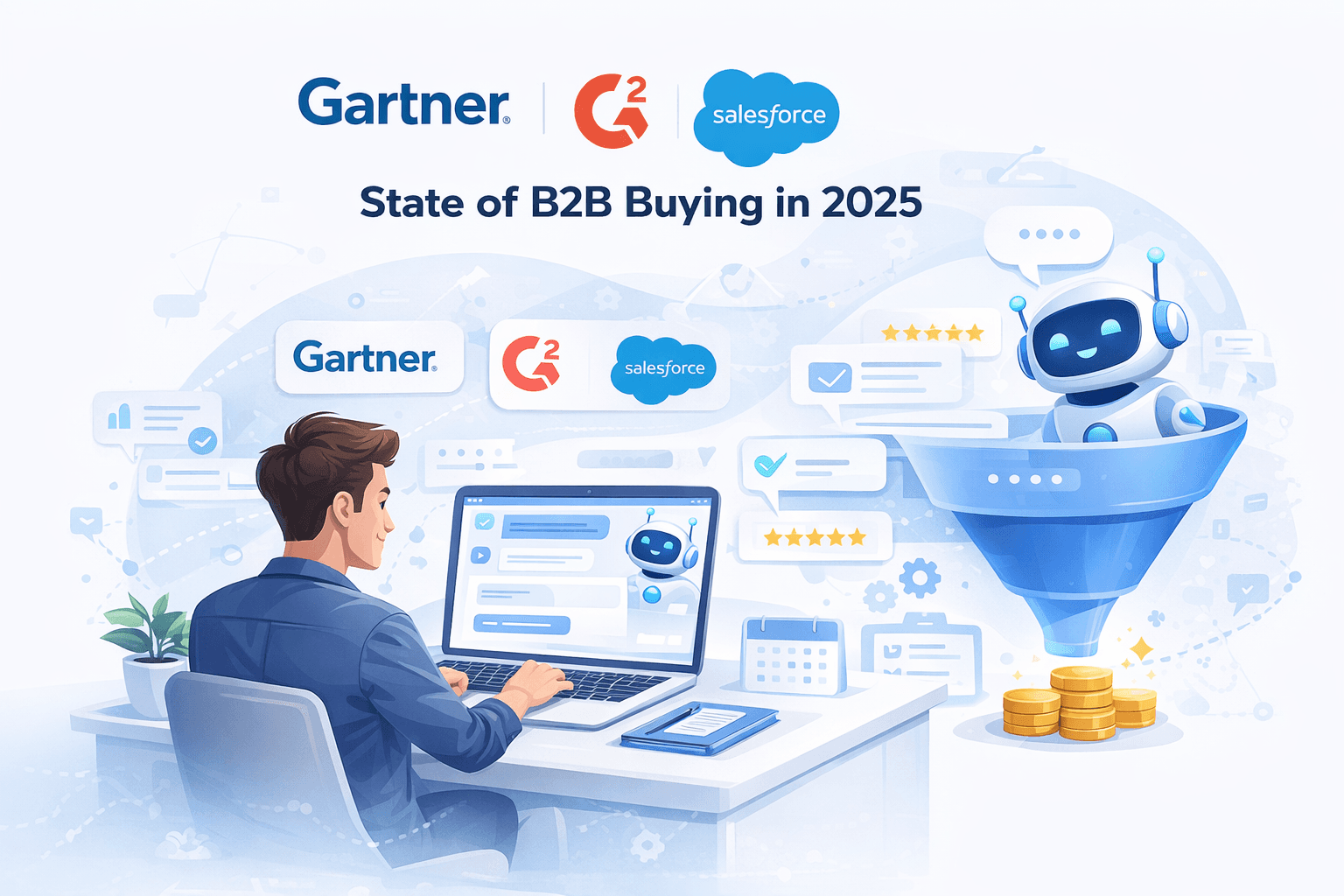
Across recent research from Gartner, G2 and Salesforce, one theme is very clear: B2B buyers now do most of the work on their own before they ever speak with a rep. Gartner data shows that a majority of buyers would actually prefer a “rep‑free” experience for large parts of the journey, while G2's 2025 buyer behavior research finds that AI chat and review sites together are now among the top starting points for vendor shortlists.
In Salesforce's latest State of Marketing report, marketers confirm the same pattern from their side: most customers expect to be able to ask questions in a digital channel and get a real answer, not just a one‑way campaign. Together, these studies paint a picture of buyers who expect self‑service research plus fast, conversational support when they need it.
- Gartner surveys show that a clear majority of B2B buyers prefer a low‑effort, largely digital buying experience, and many actively avoid irrelevant outreach.
- G2's 2025 buyer behavior research highlights that AI search and chat are now among the top sources used to build software shortlists, alongside review sites.
- Salesforce reports that more than 8 in 10 marketers believe customers expect two‑way conversations, but many teams struggle to reply consistently because data is fragmented across tools.
What this means for your website
If buyers arrive already informed, your site has to do three jobs very quickly:
- Confirm that they are in the right place for their type of company.
- Show how you fit into the rest of their stack.
- Offer a fast way to talk to a human when they are ready.
Static pages alone are not enough. Buyers expect interactive help, clear pricing guidance, and an easy path to a demo, all in one flow.
Where an assistant fits in
Because buying cycles are faster, buyers do not want to wait for an email back. A website assistant lets them:
- Ask detailed questions about fit and integrations.
- See if the tool matches their company size and needs.
- Book time with sales at the exact moment they are interested.
The companies that win in this new environment are usually the ones that respond fastest and make it easiest to move from research to a real conversation.
Further reading
For deeper detail, you can point readers to the original research: